The map pack is a separate contest
Local search engine optimization is not normal SEO done in a smaller area. The box of three businesses above the blue links is ranked by different rules, and it takes most of the clicks. You can sit first in the ordinary results and still lose every job to the three businesses in that box.
Three things decide who is in it: how close you are to the searcher, how relevant Google thinks you are, and how much it trusts you. You cannot change proximity. The other two are the entire job.
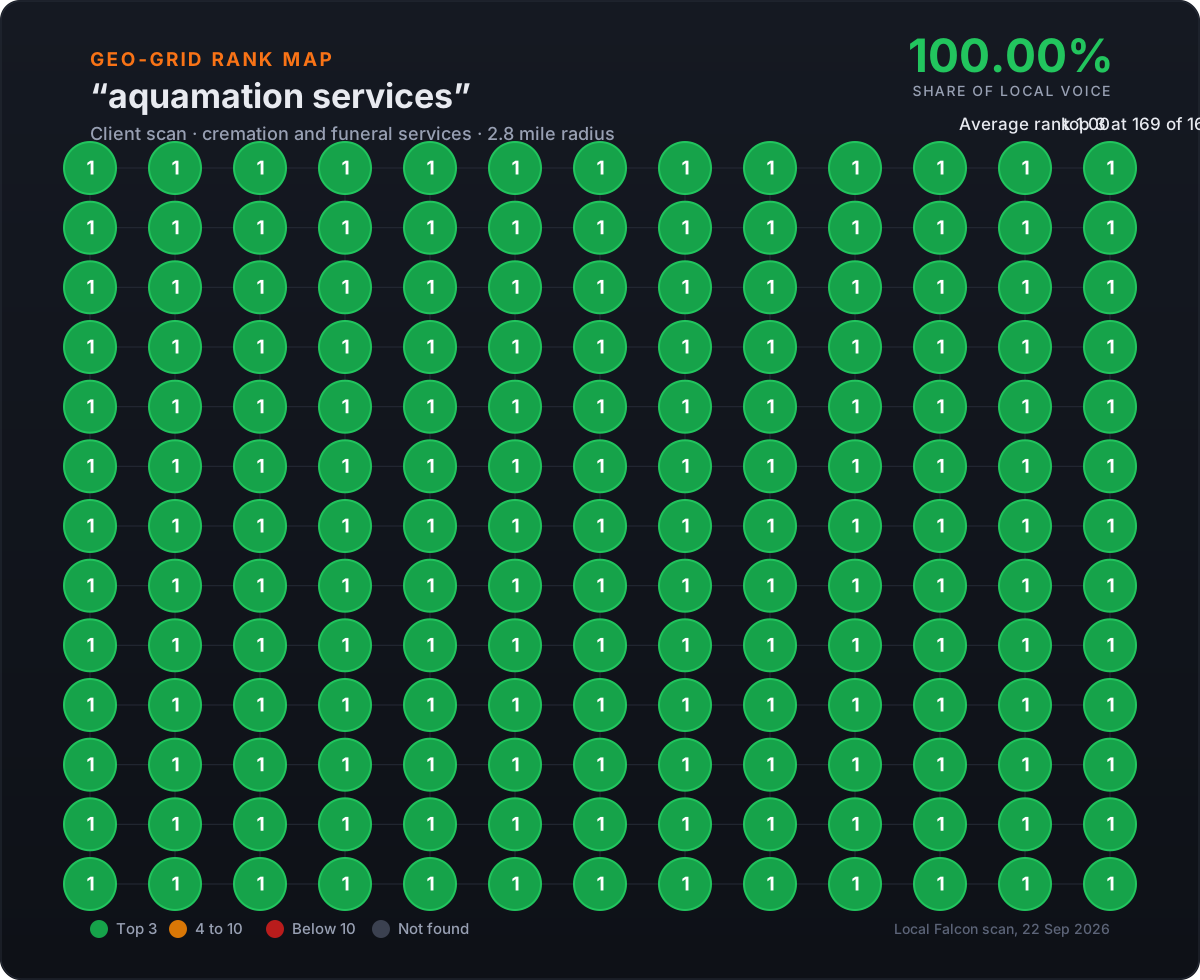
Your Google Business Profile does the heavy lifting
Google Business Profile optimization, what most people still call GMB, is the highest-value free thing available to a local business, and almost nobody finishes it. A half-filled profile is the single most common reason a business is missing from the map. Worth reading alongside it: what the Google Business Profile insights report actually shows, including why a listing surfaces for searches you never targeted.
Completed properly, not partly
Primary category plus real secondary categories, a full service list, correct hours, holiday hours, description, attributes. Every empty field is a relevance signal you are choosing not to send.
Google Maps ranking optimization
The categories and services on your profile are how Google decides which searches you are eligible for at all. Get them wrong and no amount of website work will rescue you.
The landing page it points at
Your profile links to one page, and that page needs to match the category and the city. Getting this wrong is common. Moving it once it ranks is worse. Never move a landing page that is working.
Weekly posts and updates
GBP post management keeps the profile active. It is not a ranking lever on its own, but a dormant profile next to an active competitor is a choice you are making.
Reviews that actually arrive
A text from the owner's own phone gets a reply from over half of customers. Automated review requests get a fraction of that. The unglamorous method wins, every time.
More than one location
Local SEO for multi-location businesses means each profile gets its own landing page, its own tracking number and its own content. Sharing one page across locations wastes both.
Citations, links and beating proximity
Once the profile is complete, the remaining work is convincing Google you are relevant and trustworthy enough to show outside your immediate neighborhood. That is what stretches your radius past the businesses sitting closer to the searcher.
Citation building means your name, address and phone number appearing consistently across the directories that matter, identical everywhere, because inconsistency is a trust problem. It is tedious, it is not exciting, and it is foundational.
Trust comes from links, and locally the ones that count are hyperlocal: the chamber of commerce, a youth sports team, a festival, a nonprofit you actually sponsor. Two to four genuine local links do more than fifty bought ones, and they cannot be taken away. If your market is competitive enough to need more, the broader search strategy covers what that looks like.
What we will tell you before you pay
Top three or it is not worth it
In the map pack, fourth place performs about like eightieth. If we do not think we can get you into the top three in your market, we will say so rather than take the money.
Hiding your address costs you
Service area businesses without a visible address are meaningfully harder to rank. Expect thirty to fifty percent more work for the same outcome. If you can list an address, list it.
You will not own every town
Proximity beats authority. Ranking across a whole region is done with genuine location pages, one at a time, not by adding city names to a single page and hoping.
If you serve the area south of Springfield, that is a good example of doing it properly, with a page written for that town specifically rather than one page trying to claim everywhere at once.
What to ask a local SEO company in Springfield, MO
There is no shortage of SEO companies and agencies offering local SEO services in Springfield. The difference between them is rarely the tactics, which are broadly public. It is whether they will tell you something you would rather not hear.
Is it measurable?
Ask what they will report and how. If the answer is traffic and impressions rather than map positions and phone calls, the local visibility question is not really being answered.
Do they do the boring parts?
Local citations, consistent business listings, on-page and technical SEO. Unglamorous, foundational, and the first thing skipped by anyone selling a package.
Do they mention AI search?
Potential customers increasingly ask an AI tool for a recommendation. AI search optimization is a different checklist from SEO: mentions, reviews and schema rather than links. Almost nobody local is covering it.
Getting started with SEO for a Springfield business should begin with a straight assessment of where you rank across the area right now, not a proposal. If someone quotes before they have looked, they are selling a package, not a plan. If you are not sure whether local is even the right starting point, start with what a Springfield marketing agency should be doing first.
What clients actually say
Rated 5.0 on Google. Every quote below is a real customer review on our public Google profile.
"Joseph is brilliant and gets results. He has been managing my SEO for over 4 years and my business has increased significantly with the online presence. I get calls daily from customers finding me online, which was rare before Joseph started."
"Joseph at 417Boom is the real deal! If you need SEO or web design help in Springfield, he’s your guy. He helped us skyrocket our local GMB visibility in California, bringing in a ton of new traffic. I usually wait to see results before leaving a review, but dang!!! Joseph and his team know their stuff! …"
"I didn't know anything about SEO but yes I contacted Joseph and he immediately responded to me. I sent my google page and he made an awesome video explaining how to improve my business page. He is the best what he does, very knowledgeable! Great service !"
Local SEO questions we get asked
What is the map pack and why does it matter?
The map pack is the box of three businesses with a map that appears above the normal results for local searches. It takes the majority of the clicks. Position four is very close to invisible, which is why local SEO is really a fight for three spots, not ten.
Why do I rank at my shop but not across town?
Proximity. Google shows different results depending on where the searcher is standing, so you can be first at your own address and nowhere two miles away. Extending that radius is done with relevance and trust: better content and better links, not wishing.
Do I need a physical address for local SEO?
It helps considerably. Businesses that hide their address because they travel to customers are harder to rank, realistically thirty to fifty percent more work for the same result. If you can show an address, show it.
How many reviews do I need?
Reviews do not move rankings as much as people assume, but they heavily influence whether someone clicks you instead of the business above you. The practical answer is more than the businesses you are competing with, and recent.
Is local SEO free?
Claiming and filling out your Google Business Profile costs nothing but time, and doing it thoroughly is genuinely the highest-value free thing available to a local business. What costs money is the content, the citations and the links that push you past competitors who have also done the free part.
Local SEO Springfield business owners can trust starts with an honest look at where you rank today, not a sales pitch. If you want that look first, get a free SEO audit for Springfield businesses before you spend a dollar chasing rankings. And if the map pack is only part of what your business needs, our marketing agency in Springfield can run local SEO alongside ads and web design under one plan. The map pack is no longer the only box above the results either, so it is worth seeing what it takes to be named in Google's AI answers.
Springfield local SEO questions, answered
What should local SEO cost in Springfield?
Pricing depends on how competitive your service and area are, not on a flat monthly number every agency quotes. A landscaper in a quiet suburb pays far less than a personal injury lawyer working downtown. We break down real ranges by market and business type, so you can spot a fair quote and tell it apart from a lowball offer before you sign anything. See real Springfield local SEO pricing, and how long the work takes to show up.
What actually moves a Springfield business up the map?
Three things move you up: a fully completed Google Business Profile, consistent citations across the directories that matter, and a handful of real local links from places like the chamber of commerce or a youth sports team. Most businesses skip the boring parts and wonder why nothing changes. Follow the ranking checklist we use and work through it in order.
Is local SEO worth it for a small Springfield business?
Yes, if customers near you search before they call. The map pack takes most of the clicks on a local search, and fourth place gets close to nothing. For a small business competing against two or three others in the same category, winning one of those three spots can be worth more than any other marketing dollar you spend. See what the map pack is worth.
How do I get started with local SEO in Springfield?
Start with your Google Business Profile, not your website. Claim it, fill in every field, pick the right primary category and add real photos. Then check your name, address and phone match everywhere online. Most Springfield businesses can do that part themselves in a weekend. A local SEO company earns its fee on what comes after: citations, reviews and links.
Is SEO being phased out now that AI answers questions?
No. It is splitting into two jobs. Classic search still sends the calls, and the map pack still decides who gets them locally. What changed is that ChatGPT and Google's AI answers now pick businesses too, and they read different signals: Bing listings, reviews and plain mentions of your name. Here is how AI search picks a local business.
Want to see where you actually rank?
We will map your current position across the area and show you the gaps.