Your category pages are the ones that earn
People search for the type of thing before they search for the exact item. That means category pages carry far more search volume than individual products, and in most stores they are a bare grid of thumbnails with no words on them at all.
A category page that explains what the range is, who it suits and how to choose between options can rank for the searches that bring people in at the top of the funnel. That is usually the single largest untapped opportunity in an online store, and it costs nothing but writing.
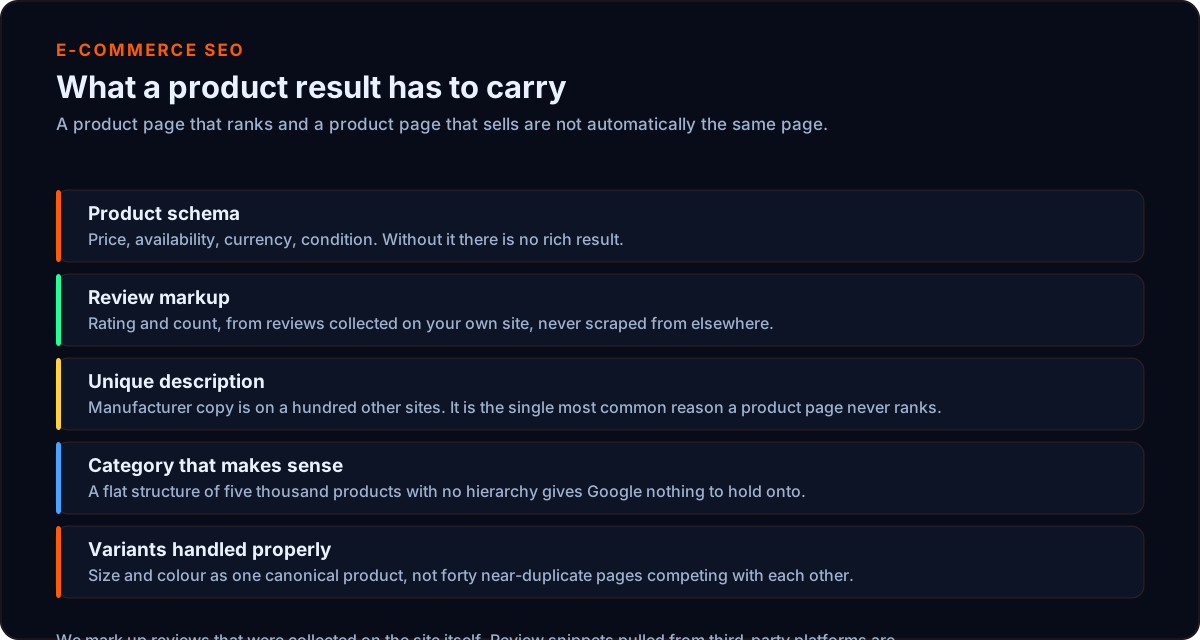
Product pages and the technical mess underneath
Product pages that are not copies
Manufacturer descriptions appear word for word on every competitor selling the same item. Google has no reason to prefer your copy of it. Rewrite the products that actually sell, not the whole catalog.
Filters generating thousands of URLs
Every size, color and price combination can create its own address. Left alone, Google spends its crawl budget on near-identical pages instead of the ones you want ranking. Canonicals and crawl rules fix it.
Product schema
Structured data is what puts price, availability and star ratings into the search result itself. On a shopping search, that visual difference decides who gets clicked.
Discontinued products
Deleting a product that had links and traffic throws away everything it earned. Redirect it to the closest live item or its category. Do not let it 404 quietly.
Speed with a full catalog
Stores get slow as they grow: heavy images, app scripts, bloated themes. Shoppers on phones leave, and Google notices they left.
Links still decide it
All of the above gets you eligible. Whether you outrank an established competitor still comes down to whether other sites vouch for you.
Shopify, WooCommerce, or fixing what you have
Both platforms rank perfectly well. Shopify is simpler to run and imposes a URL structure you cannot argue with. WooCommerce hands you full control and trusts you to use it sensibly. The platform is rarely what is holding a store back. The structure and the content are.
If you are starting from nothing, an e-commerce build sets the categories, URLs and structured data up correctly from the beginning, which is far cheaper than retrofitting later. That is the same discipline as any other site built to be found rather than just built.
And if you also sell to people nearby, do not ignore the other half, since showing up in local results reaches buyers who want it today rather than shipped.
What we would do in the first ninety days
Stores are big, and the temptation is to fix everything at once. That spreads effort thinly across thousands of pages and produces nothing you can point at. The order matters more than the effort.
First, stop the bleeding
Crawl the store and find what is actively broken: products that vanished without a redirect, filter URLs eating the crawl budget, category pages accidentally excluded from search. These are not improvements, they are leaks, and they cost nothing but attention to close.
Then, the categories that already sell
Not all of them, just the handful that carry your revenue. Real copy explaining the range, how to choose, what the differences are. This is where the volume is and where most stores have literally nothing.
Then the products worth the words
Your best sellers get descriptions nobody else has, proper schema so the price and rating show in the result, and images that are not four megabytes each. The long tail of the catalog can wait, possibly forever.
Only then, links
Once there are pages worth ranking, earning links to them is what closes the gap on an established competitor. Doing this first is the classic mistake: pointing authority at pages that were never going to convert it.
Ninety days is enough to finish the first three and start the fourth. It is not enough to outrank Amazon, and anyone who tells you otherwise has not tried.
Ecommerce SEO in Springfield, MO
Plenty of stores run by Springfield businesses sell nationally and locally at once, and the two need different work. Nationally you are competing on content depth and earned links. Locally, a Google Business Profile and local search engine optimization put you in front of people in Springfield and Ozark who would rather collect today than wait for a parcel.
Ignoring the local half is common and expensive. Local SEO services cost a fraction of what national ecommerce SEO does, and for a store with any physical presence they usually convert better, since someone searching Google Maps for what you sell is much closer to buying than someone three pages into a comparison.
AI search matters here too. When someone asks an AI tool where to buy something, the answer is assembled from mentions, reviews and structured data rather than rankings. AI search optimization for a store means the same product schema you should have anyway, plus reviews detailed enough to be quoted back. Stores with a shopfront as well as a checkout should read that alongside everything else that brings customers to a Springfield business.
What store owners ask us first
How long before I see search results?
Three to six months for meaningful movement, longer on a new domain. Category pages usually move first because they are the least contested part of most stores.
Do I need SEO experts or can my developer do it?
A good developer can fix the technical half. Deciding what to optimize, and what to write, is a different skill, and it is where most of the return is.
I sell online and in person. Which first?
Local, almost always. It is cheaper, faster and reaches people ready to buy. Then build the national side on top once the local visibility is earned.
What clients actually say
Rated 5.0 on Google. Every quote below is a real customer review on our public Google profile.
"Joseph is brilliant and gets results. He has been managing my SEO for over 4 years and my business has increased significantly with the online presence. I get calls daily from customers finding me online, which was rare before Joseph started."
"Joseph at 417Boom is the real deal! If you need SEO or web design help in Springfield, he’s your guy. He helped us skyrocket our local GMB visibility in California, bringing in a ton of new traffic. I usually wait to see results before leaving a review, but dang!!! Joseph and his team know their stuff! …"
"I didn't know anything about SEO but yes I contacted Joseph and he immediately responded to me. I sent my google page and he made an awesome video explaining how to improve my business page. He is the best what he does, very knowledgeable! Great service !"
E-commerce SEO questions we get asked
Which matters more, category pages or product pages?
Category pages, almost always. People search for the type of thing before they search for a specific item, and category pages carry more search volume. Most stores pour effort into product descriptions and leave their categories as bare grids of thumbnails.
Do I need to write unique product descriptions?
For products that matter, yes. Manufacturer descriptions appear word for word on every competitor selling the same item, which gives Google no reason to prefer you. For a large catalog, do the ones that actually sell first rather than trying to rewrite everything.
Is Shopify or WooCommerce better for SEO?
Both can rank perfectly well. Shopify is easier to run and imposes a URL structure you cannot change. WooCommerce gives you full control and expects you to use it responsibly. The platform is rarely what is holding a store back.
Why do my filters create so many URLs?
Filtering by size, color and price generates a new URL for each combination, and a store can produce tens of thousands of near-identical pages that way. Left alone, Google wastes its crawl on them and your real pages get less attention. It is fixable with canonical tags and crawl rules.
Want to know where your store leaks?
We will audit the categories, products and technical setup and show you the order to fix them in.