Digital Billboard Advertising in Nixa, MO
Most of Nixa drives the same two roads every morning. A board on that route reaches the same households repeatedly for weeks, which is how outdoor advertising actually works. We buy the faces, build the creative, and measure what the campaign did to your search demand.
Why a small market is better for billboards, not worse
Advertisers assume outdoor works best where the traffic count is biggest. For a local business the opposite is usually true, and Nixa is a good example of why.
A billboard in a dense metro is seen once by an enormous number of strangers, most of whom will never be your customer. A board on the Nixa commute is seen twice a day, every working day, by a relatively small set of households, and a large share of them are inside your service area. Repetition against the right people beats reach against the wrong ones, and it costs a fraction as much.
The town has grown quickly, which sharpens the effect. A meaningful share of Christian County households arrived recently, have no existing supplier for most trades, and are actively deciding who to call. Those people are forming their shortlist right now, and a board is one of the few ways to get onto it before they search.
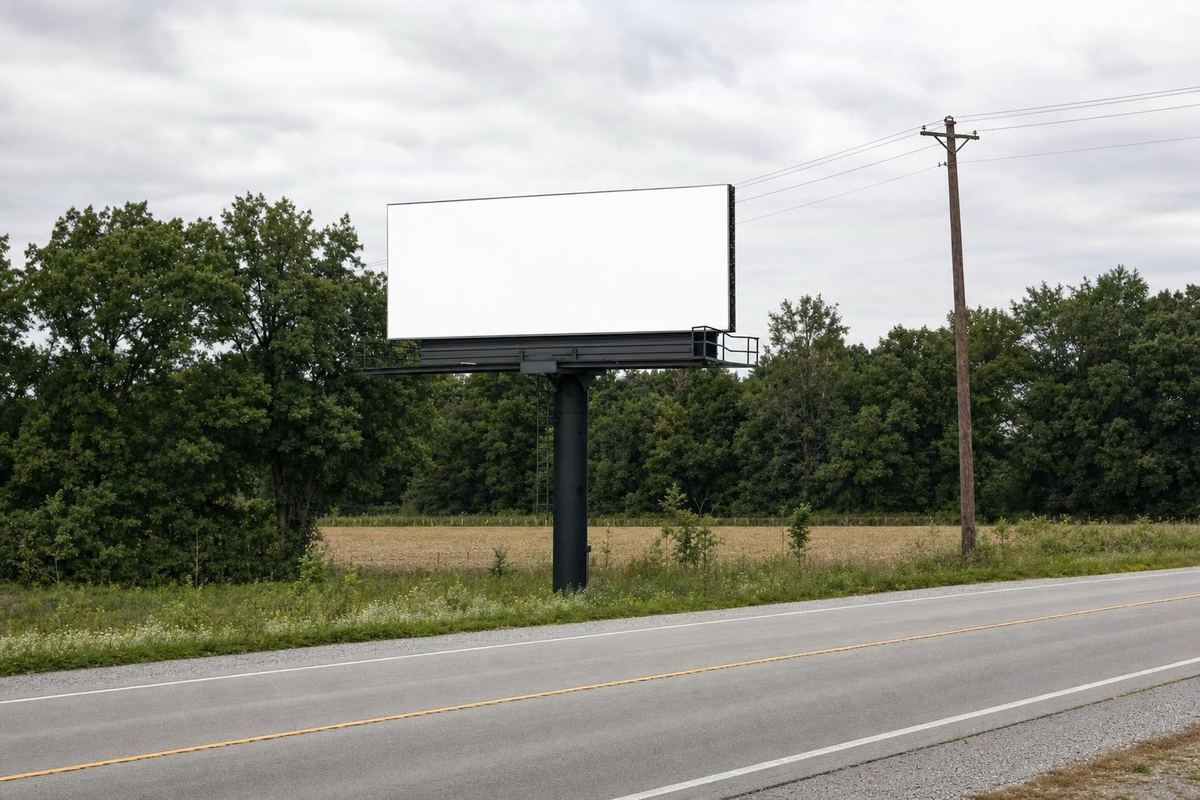
The corridors that carry Nixa traffic
There are not many roads here, and that is the point. Inventory is limited, which keeps rates sane and makes route selection simple.
Highway 160, the main artery
The commuter run north toward the Springfield job market and south into Christian County. This is the highest-value billboard advertising in the area for any local trade, because the same vehicles pass the same board twice a day rather than once a season.
Highway 14 east and west
The cross route connecting Nixa with Ozark and the western county. Lower traffic count than 160 and a more concentrated local audience, which for a service business is frequently the better trade.
The retail strip
Surface-street positions at lower speed near the shops people use weekly. Longer dwell time on the creative, so the artwork can carry one more word than a highway face. Right for storefronts and anything with an address worth naming.
The northern approach
Faces catching traffic heading toward the metro. Useful when your service radius extends north, and the honest place to spend if you want the campaign reaching beyond Christian County.
You do not need many faces here. One strong position on the route your customers drive, held for a real run, outperforms a scattered buy across four mediocre ones.
Billboard rates outside the metro
A digital face in this market generally runs a few hundred to around a thousand dollars per four-week period, well under the Springfield and Joplin rates on comparable traffic. Static bulletins cost more to launch because the vinyl has to be printed and installed, then less per period afterward.
Three things move the number: the traffic count on the route, how many advertisers share the loop, and how far ahead you commit. Inventory outside a metro is thin, so the good positions on Highway 160 sell out earlier than people expect and late buyers take what is left rather than what works.
We quote the media cost and our fee as separate lines. If an advertiser cannot see that split they cannot tell what is being marked up, and that is a reasonable thing to insist on from anybody.
Which billboard advertising options fit a small market
Outdoor splits into static and digital, and local businesses regularly buy the wrong one. A static bulletin is printed vinyl held for the whole period, so every pass is yours. Digital shares the face in a loop, giving you roughly one pass in six, in exchange for same-day artwork changes and shorter commitments.
On commuter routes near Nixa, static usually wins for a business with one steady message, because the repetition against the same target audience is the entire mechanism. Digital wins when you want to test creative or run a seasonal push. Billboard locations across the wider Springfield area, out toward Battlefield and the rest of the state of Missouri, are priced very differently, so the same budget buys a very different campaign depending where you point it.
Vendors quote a cost per thousand alongside the period rate. Treat that carefully: it counts vehicles on the road, not people who looked up. For local businesses the useful question is not the cost per impression but whether the route is one your customers genuinely drive.
Creative for a road where people are not in a hurry to read
Highway speed gives a driver roughly six seconds. A surface street gives a little more. Either way the rules are unforgiving and most artwork breaks them.
Seven words or fewer
Your name, what you do, one reason to remember it. Everything past seven words is read by nobody. A phone number belongs on a slow surface street face and nowhere else.
Contrast, not color
The eye resolves light against dark long before it resolves one mid-tone against another. Artwork that looked confident on a monitor frequently vanishes at dusk from three hundred feet.
Say the town
Naming Nixa on the board converts better than a slogan that could belong to a company anywhere, because proximity is the advantage you are actually selling.
One idea per face
A digital campaign can rotate several creatives. Use that to run several single ideas rather than to fit three offers onto one face.
Measuring outdoor without guessing
The standard billboard report is an impression estimate supplied by the operator. That figure describes the road. It says nothing about whether your campaign did anything.
A board that works leaves evidence you can check. Somebody who reads your name while driving does not remember a web address. They search your business name later, or your name plus the service. That appears as a rise in branded search, and it begins within weeks of a campaign going live.
We record a baseline before the first face goes up, then read branded search volume, direct traffic and business profile views against it. Imperfect, and far better than an impression count. It is also how we tell you when a board is not earning its rate, which is a conversation most media sellers avoid.
It is also why outdoor belongs beside the search work rather than in its own budget. The board creates the demand and your listing catches it, so if the local search side is weak you are paying to send customers to a competitor.
What advertisers ask before booking
How much does it cost to advertise on a digital billboard?
Outside the metro, a few hundred to around a thousand dollars per face per four-week period, set by traffic count and how many advertisers share the loop. Launching costs less than a static bulletin because there is no print or install.
How much does a billboard cost in Missouri?
It varies enormously by market. Interstate faces near a large city run into several thousand per period, while a strong local route in a smaller town is a fraction of that for an audience far more likely to buy from you.
Can I advertise on digital billboards as a small business?
Yes. Small local advertisers make up much of the inventory here. One good face on the route your customers drive is a realistic first campaign and normally beats spreading the same money thinly.
How long should a campaign run?
Recall is built by repetition, so a two weeks shows nothing. Four to twelve weeks on the right route is the honest minimum, and that is the window we measure the branded search lift across.
More on buying a billboard
The questions we get asked before a first outdoor buy, answered properly.
What does a billboard actually cost?
Working rate ranges by corridor, the four things that move the number, and why cost per thousand flatters the wrong boards.
How does billboard advertising work?
Who owns the structures, how digital and static differ, and what happens between booking and going live.
How many boards are there to choose from?
Why no exact count exists, why supply is fixed by permitting, and how to count only the faces that matter to you.
How often will people see my board?
Real exposure math on a shared digital face, and why a four-week test ends exactly when the effect would start.
How far ahead should I book?
Lead times by format, what booking early buys you, and the week-by-week sequence back from your live date.