How Does Billboard Advertising Work in Springfield, MO?
2026-09-24
Billboard advertising in Springfield works by renting space on a structure beside a road for a set period, usually four weeks at a time. You supply artwork, the operator displays it, and you are charged against the traffic passing that spot. Digital faces rotate several advertisers in a loop. Static bulletins are yours alone for the whole run.
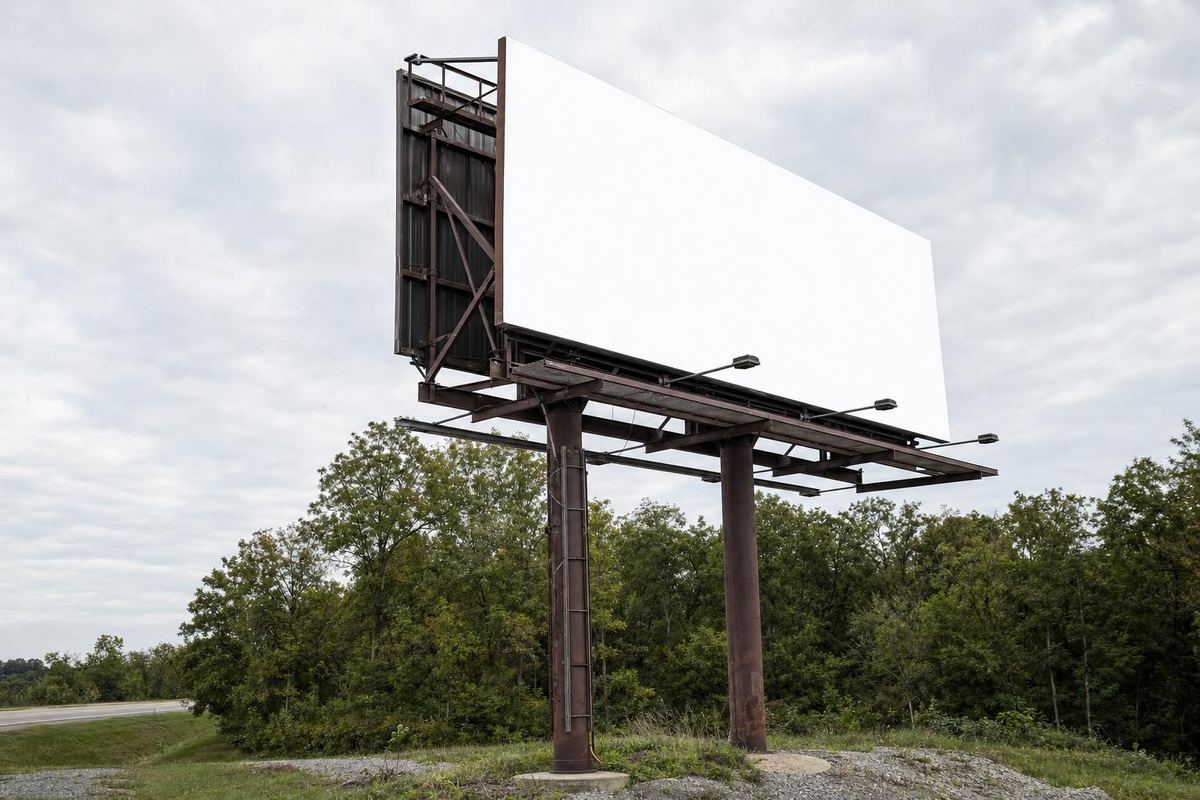
Who owns the boards around Springfield
Every billboard belongs to an operator who leases the land, holds the permit and sells the display time. Outdoor advertising in Missouri is regulated, and structures along the interstate system require permits through the state, which is why new boards appear rarely and existing inventory holds its value.
That matters to an advertiser for one practical reason: supply is fixed. Unlike paid search, where more budget buys more inventory, there are only so many Springfield billboards facing the right direction on the right road. Good faces sell out, and the businesses holding them tend to keep renewing.
Digital and static work differently
A digital billboard is an LED screen. Your creative appears in a rotation, typically six to eight advertisers sharing the loop, each holding the face for around eight seconds. Across a day, a commuter passing twice sees your artwork many times a week, though not on every single pass.
A static bulletin is printed vinyl stretched across the face. It is yours for every pass by every vehicle for the whole period. It costs more to launch because the vinyl has to be printed and installed, and it cannot be changed without reprinting.
The choice is not about which is better. Digital suits an advertiser who wants to change a message, test creative or run something time-sensitive. Static suits a business with one steady message that wants every pass.
The Springfield corridors and who they reach
Where the board sits decides who sees it, and the roads here serve very different audiences.
Interstate 44 carries the heaviest traffic count in Missouri outside the two big metros, and a billboard in Springfield on I-44 reaches most of it, much of it moving between Joplin, Springfield, Kansas City and St. Louis. Strong for brand building, weaker for a neighborhood service business, because a large share of those drivers do not live here.
U.S. Route 60, the James River Freeway, is the south Springfield commute. The same vehicles pass twice a day, five days a week, which is exactly the repetition outdoor advertising depends on.
Glenstone and Kearney are surface streets. Lower speed means longer dwell time on the creative and room for one more word than a highway face allows.
U.S. Route 160 runs toward Nixa and Christian County. The right buy when your service area extends south rather than across the whole metro.
There is also visitor traffic heading toward Branson and the Ozarks, and campus traffic around Missouri State University. Both are real audiences and both are wrong for most local trades, which is why an impressive traffic count on its own is a poor reason to buy a board.
What is actually available across the Springfield metro
Inventory across the Springfield metro splits into static and digital. Bulletin billboards are the large highway format. Digital bulletins are the LED faces that rotate advertisers. Posters are smaller and sit on slower roads, and they are frequently the right buy for a business whose target audience never uses the interstate.
Digital billboards in Springfield are concentrated on the higher-traffic corridors, because the screens cost more to install and operators put them where the rate can justify it. Outdoor advertising in Springfield therefore tends to look like a handful of expensive digital billboard faces on the main routes and a much longer list of static positions everywhere else. A sensible Springfield billboard advertising plan usually mixes the two rather than insisting on one.
What an operator means by CPM
Quotes often carry a CPM, the cost per thousand impressions, beside the period rate. In out-of-home advertising an impression counts a vehicle passing the structure, not a person who looked and certainly not one who remembered.
Judged on CPM alone an I-44 face nearly always looks like the best value in Missouri. For a local trade it frequently is not, because much of that traffic is passing through. A billboard in Springfield on a commuter route with a worse CPM can be the better buy, because the people seeing it live here.
What actually happens when you book
The sequence is straightforward and worth knowing before you call an operator.
You agree the structure, the format and the period. You supply artwork to that operator's exact specification, which differs by board and is not a standard size. For digital, the file is loaded and starts on your scheduled date. For static, the vinyl is printed and a crew installs it, which is why static needs more lead time.
Lead time is the part advertisers underestimate. Two to four weeks ahead is a reasonable minimum for digital, and longer for static. Booking well ahead also gets a better rate, because operators discount to fill inventory early rather than late.
How a billboard produces a customer
This is where outdoor advertising is most misunderstood. A billboard does not work like a search ad, where somebody types a need and you answer it. Nobody pulls over to call you.
What a board does is make your name familiar before the need exists. Then when the furnace fails or the roof leaks, yours is the name already in the room, and the customer searches for it. That is why the effect shows up as a rise in branded searches rather than as direct traffic, and it is why a single four-week run usually shows nothing. Recall is built by repetition.
It also means the board and your search presence are one system rather than two budgets. The board creates the demand and your listing catches it. If somebody sees your name, searches it that evening and finds a thin profile, you paid to send a customer to a competitor.
Is it right for your business
Billboards suit businesses with a broad customer base, a short decision window and a memorable name. Trades, restaurants, medical, auto, storage, anything most households eventually need.
They suit narrow specialist businesses far less well, because you are paying to reach everybody in order to find the few. For those, search usually buys the same customer for less.
One last practical note. Because Missouri controls outdoor advertising permits along its highways, the set of billboards in Springfield changes very little year to year. You are choosing from a fixed map rather than a growing one, so the question is never whether a billboard in Springfield is available in the abstract. It is which of the existing faces is free for your dates, and whether that face sits on a road your customers drive.
We plan, buy and measure these campaigns, and the corridors worth buying are set out on our Springfield digital billboard page, including which roads we think are overpriced for local advertisers.
Call or text 417-619-5056 and tell us what you sell and how far you travel to do it, and we will tell you whether a board is the right spend this quarter.
Sources
- 1. Missouri Department of Transportation, outdoor advertising permits and regulation. https://www.modot.org/outdoor-advertising
- 2. Out of Home Advertising Association of America, formats and industry standards. https://oaaa.org/
- 3. Federal Highway Administration, Highway Beautification Act and outdoor advertising control. https://highways.dot.gov/
Joseph Vang
Founder & SEO Strategist, 417BOOM
Joseph runs 417BOOM, a veteran-owned internet marketing agency in Springfield, Missouri. He works on local search, Google Business Profiles, outdoor advertising and the content that gets small businesses found. More about Joseph.