Generative Engine Optimization in Springfield, MO
AI crawlers do not run JavaScript, do not click, and do not guess. Generative engine optimization is the technical work that makes sure they can read your business, understand it, and repeat it correctly.
What generative engine optimization means
Generative engine optimization, or GEO, is the technical side of AI visibility. It covers everything that decides whether a generative engine can read your website at all, work out what your business is, and lift a fact out of it without getting that fact wrong.
It sits underneath the other two pieces. Answer engine optimization is about reputation and mentions. AI Overviews are a Google surface fed by Google's index. GEO is the plumbing both of them depend on, and it is the part a small business can fix fastest, because it does not require anyone else's cooperation.
Most sites fail the first test without knowing it
Google can render JavaScript. The crawlers behind the AI systems largely cannot. GPTBot, ClaudeBot and their peers take whatever the server sends and treat that as the entire website. If your pages assemble themselves in the browser, those crawlers receive an empty shell with no headings and no text, and every other piece of AI work is wasted effort.
This has nothing to do with how the site looks or how well it ranks. A business can sit at the top of Google and be completely invisible to an AI system for this one reason. It is also the cheapest thing in this field to test: request the page the way a crawler does, with scripts disabled, and count the words that come back.
We run that test before quoting anything, because the answer changes the whole plan. A site that passes needs structure and content. A site that fails needs a developer first, and we will say so rather than sell you work that cannot land.
How generative search decides what to quote
Generative AI systems do not rank pages, they assemble an answer. A language model reading your website breaks it into chunks, works out semantically what each chunk is about, and keeps the ones that answer the question it was asked. When it writes the reply it will cite the chunks it used. That is why a citation is won at the paragraph level rather than the page level, and why a brilliant page with one buried fact loses to a plain page that states the fact in its opening line.
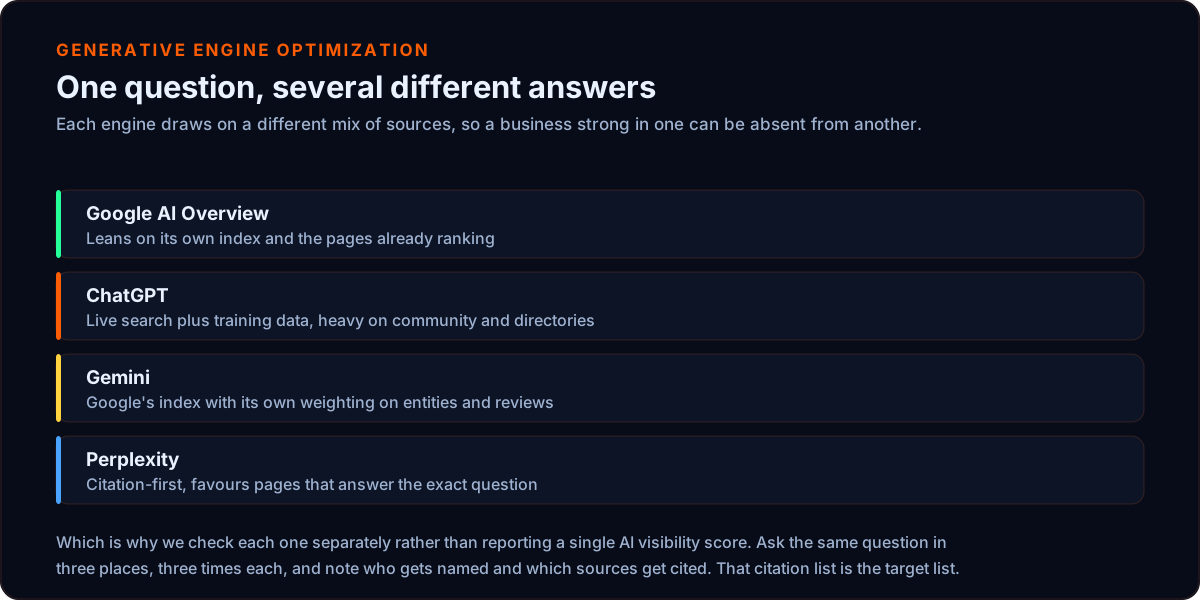
Traditional search returns your page and lets a person judge it. Generative search reads your page, decides what it means, and either uses it or discards it before anyone sees anything at all. ChatGPT, Gemini and Perplexity each run that process over different source material, and the AI models behind them change what they favor without announcing it, which is why this is measured monthly rather than set once.
None of it rewards clever writing. AI-generated answers are assembled from statements a machine can attribute safely, so the winning page is usually the clearest one, not the most polished one.
Different language models favor different sources, so tools like ChatGPT, Perplexity and the generative AI platforms behind Google AI Overviews can each name a different business for the same question. AI SEO is therefore not one setting to switch on. The work is making your digital presence legible to every one of those AI engines at once, then watching the search results to see which of them changed its mind.
What generative engine optimization actually covers
Server-rendered content
Real HTML with real headings in the response, not a mount point that fills in later. Static generation, server rendering or a pre-render layer. This is a developer job, and it is the one item on this page that cannot be solved with words.
A connected entity graph
One Organization, one Person for the owner, one LocalBusiness per location, services attached to it, all referencing each other by ID rather than repeating themselves. Scattered markup describes five businesses. Connected markup describes one.
An llms.txt file
A plain text map at your domain listing your pages with a sentence about each, plus the facts an AI system would otherwise have to infer. Ours is public. It takes about an hour to build and it removes most of the guesswork.
Content in liftable chunks
Headings that state the question, an answer in the sentence underneath, short self-contained sections. A machine quotes a paragraph, not a page, so every paragraph has to make sense alone.
Markup that matches the page
Every question in your FAQ schema visible on the page, every service in your markup actually offered, every rating real. Mismatched markup is a trust problem, and trust is the entire currency here.
Crawl access and speed
Robots rules that do not accidentally block AI crawlers, pages that return quickly without a challenge page in front of them, and a sitemap that matches what is really there.
Why this comes before the content
Crawlability first
If the crawler receives nothing, nothing else can be measured, written or earned. This is a yes or no answer and it takes minutes to establish.
Entity second
Before a system can recommend a business it has to be sure which business it is looking at. One name, one address, one phone number, one owner, stated the same way in the markup and on the page.
Structure third
Headings, FAQ blocks and a clean llms.txt turn a readable site into a quotable one.
Then content and mentions
Only once the machine can read you does it make sense to spend money on what it reads, which is where the rest of the AI visibility work begins.
Doing these out of order is the most common way money gets wasted on AI marketing. Articles written for a site that AI crawlers cannot read are articles nobody in that world will ever see.
What GEO shares with traditional SEO
Most of this is not new. Search engine optimization has rewarded fast pages, clean structure and honest markup for twenty years. What changes with AI-driven results is the metric you watch and where the proof turns up.
Keyword work still decides what a page is about
A keyword tells a machine which question this page exists to answer. That was true when the only reader was a search engine and it is still true now that a language model is reading the same words.
The technical bar is the same, only less forgiving
Traditional SEO tolerates a slow page or a messy template because a person will wait a second and a search engine will render it anyway. An AI platform simply moves to a source that loaded cleanly.
The metric moves from position to citation
An SEO strategy is judged on positions, traffic and conversion. GEO is judged on whether you were cited at all. Online visibility is two scoreboards now, and a business can be winning one while sitting at zero on the other.
The tools change, the judgment does not
We use AI tools to measure AI platforms, because reading the answers by hand does not scale. Deciding what to fix first is still a human call made from the data.
Any digital strategy that already takes search optimization seriously covers most of this, and it sits directly on top of the local SEO work a Springfield business should be doing anyway. The gap in most digital marketing strategies is not a secret technique. It is that AI-driven search never gets measured, so nothing ever gets optimized for it.
Frequently asked questions
Is GEO just SEO with a new name?
The technical half overlaps heavily, and anyone who tells you it is entirely new is selling. What is genuinely different is the audience: search engines render pages and rank them, generative engines read what they are given and quote it. That difference is what drives the JavaScript and structure work.
How do I know if my site fails the crawler test?
Request your own homepage with scripts disabled and see whether your headline and text come back. We do this free as part of the visibility check, and the result is a plain yes or no, not a score.
Does my site need rebuilding?
Usually not. Most local business sites on WordPress or a static build already serve real HTML and just need structure and markup work. Sites built entirely in the browser are the exception, and those need developer time before anything else is worth doing.
Is llms.txt an official standard?
Not an approved one, no. It is a convention that has been widely adopted, it costs an hour, and it does no harm if a system ignores it. We treat it as cheap insurance rather than a magic file.
Will this help my normal Google rankings?
Most of it does, because clean structure, honest markup and fast pages have always been rewarded by search engines. That is the argument for doing the technical half even if you are unconvinced about AI search entirely.
Find out what the crawlers see
We will fetch your site the way an AI crawler does, tell you how much of it comes back, check your structured data and report what is missing. We set out the source types AI answers lean on separately. Free, and the answer is useful whether you hire anyone or not.